
JUICE THE BLUEBERRY
Can Rail Be a Real Solution Again?
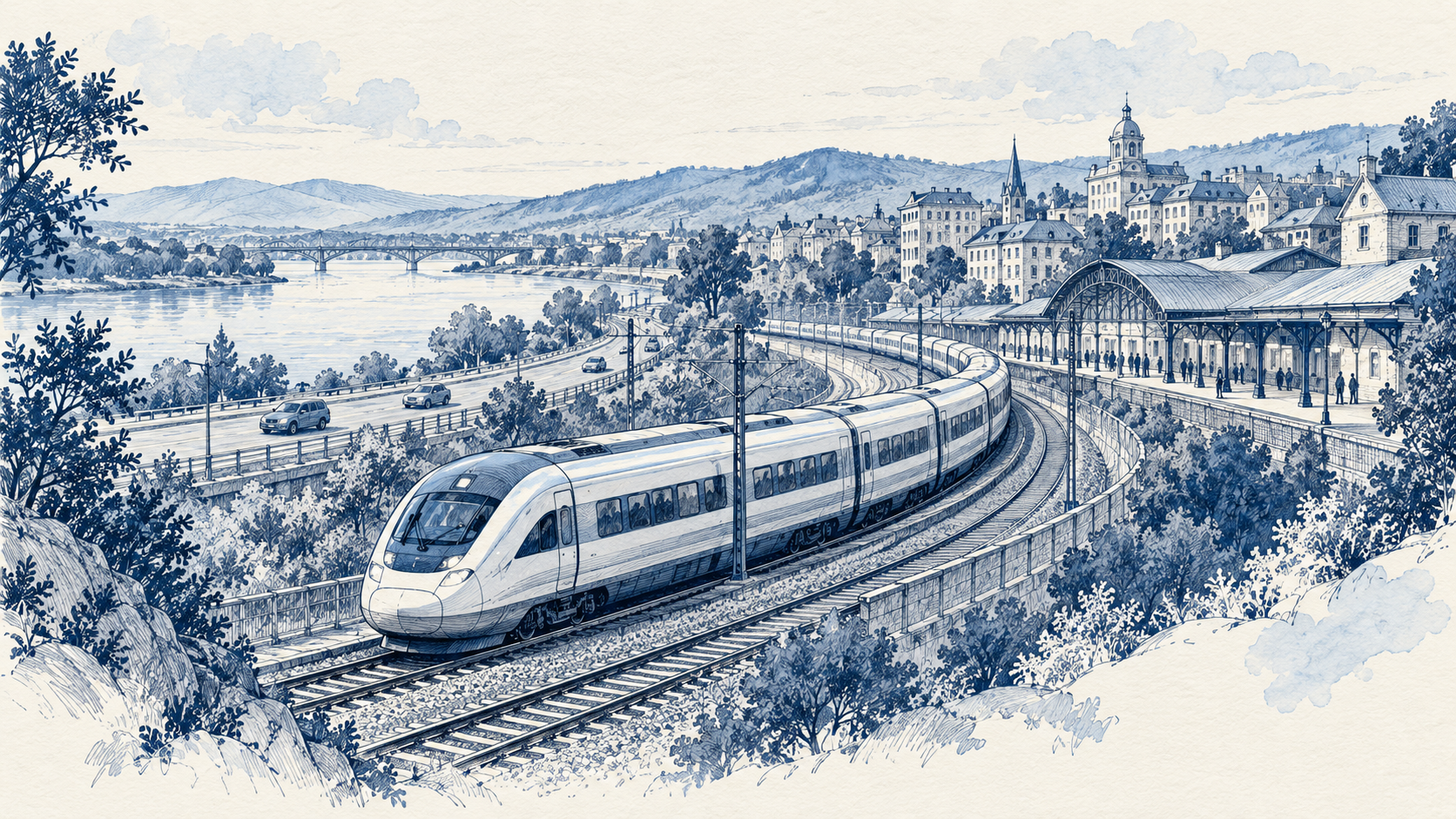
The answer depends on a corridor, a timetable, and the alternative travelers actually use.
“Build more rail” is not yet a transport plan. A train between two cities competes with a specific drive, bus, or flight, each with a door-to-door time and price. It needs track access, stations, reliable frequency, equipment, operating funding, and a realistic estimate of riders.
The Federal Railroad Administration's Corridor Identification and Development program funds early planning for selected passenger corridors. Its initial $500,000 award supports the start of a scope, schedule, and cost estimate for a service development plan. Selection is therefore an invitation to develop a proposal, not proof that construction is funded or a train will run. The FRA has identified many corridors for future development, and individual projects can change or end.
To decide whether one corridor is a good solution, compare the service plan's projected travel time and frequency with the actual road and air options. Include station access, transfers, capital work, annual operating subsidy, capacity, reliability, and the effect on freight movements. Model more than one ridership level. A route that works only under an optimistic forecast deserves a different verdict from one that remains useful under conservative demand.
Rail can be a real solution where those numbers and operating agreements support it. The homepage question becomes reportable only after we select a corridor and audit its plan. This draft makes no national claim that rail is always cheaper, cleaner, or faster.
Sources: FRA Corridor ID program; FRA program and funding updates.