
JUICE THE BLUEBERRY
Are We Measuring the Right Things?
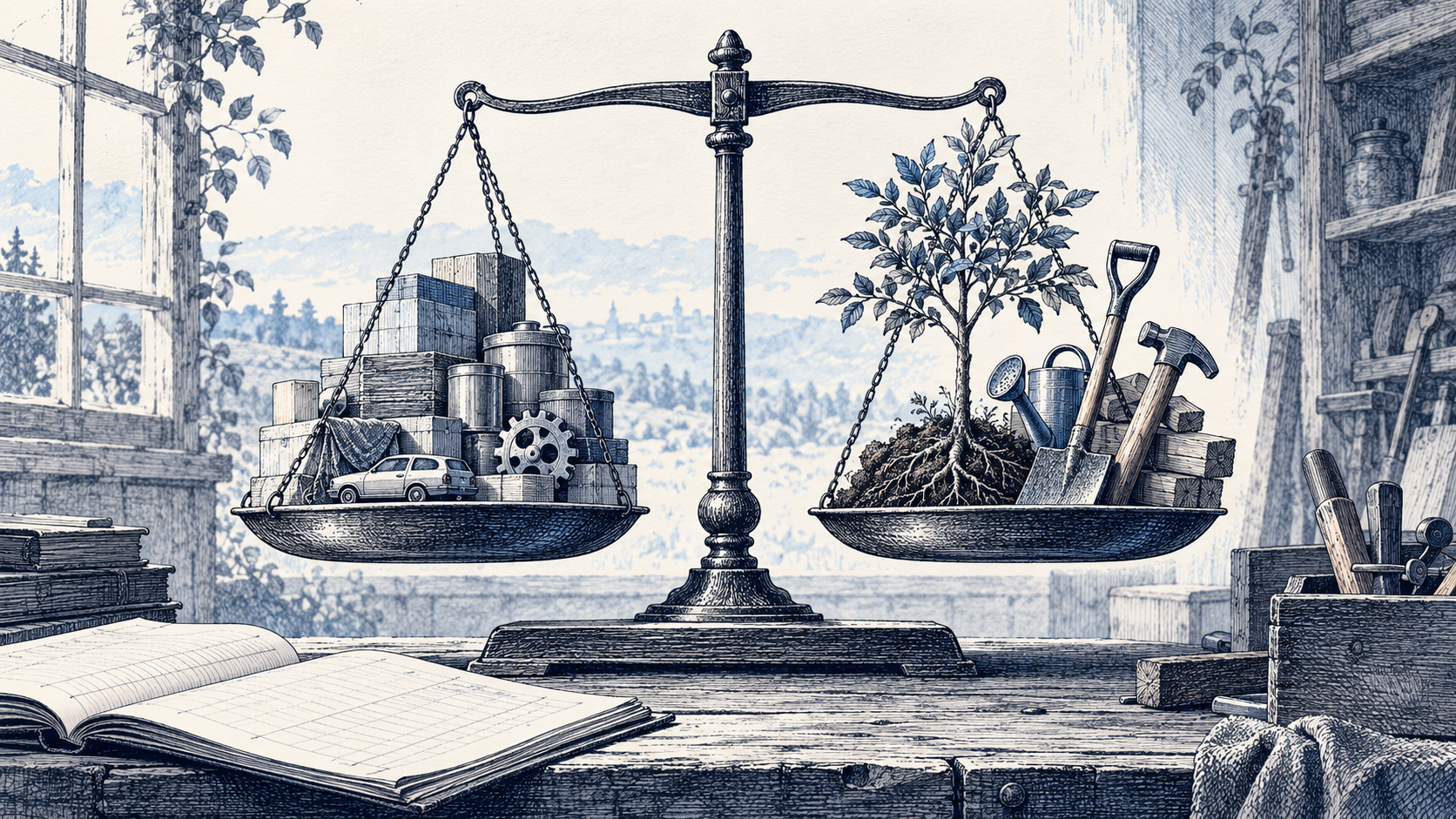
Economic output and lasting prosperity answer different questions.
Gross domestic product measures the value of production during a period. It is indispensable for describing economic activity. It is less direct as a measure of whether the productive base that supports future living standards is growing. An economy can produce more this year while wearing out equipment, depleting resources, or failing to invest in people.
The World Bank's Changing Wealth of Nations tracks produced capital, natural capital, human capital, and net foreign assets alongside GDP. Its purpose is to examine whether growth in output is accompanied by growth in the underlying asset base. That is an additional lens, not a replacement for GDP. Wealth estimates require assumptions about valuation, natural resources, and human capital; revisions can change the picture.
Picture a community that increases output by running an existing plant harder. GDP may rise. If maintenance is deferred and the workforce shrinks, the community might be less prepared for the next decade. The opposite can happen when a community invests heavily today and production arrives later. Neither example proves a national trend; each shows why a single headline number can miss the timing and durability of change.
For a real test, select a country and a fixed period, compare real GDP per person with real wealth per person, and explain the components driving any divergence. Then check employment, health, and distribution rather than assuming an average describes everyone. The point is to ask a more exact question of each measure, not to invent one perfect index of human progress.
*Source: World Bank, The Changing Wealth of Nations. Reporting gap:* named country, period, and comparable series before making a numeric claim.